ChatGPT Begins Ad Testing
OpenAI officially announced on February 10, 2026, that it has begun testing advertising features for ChatGPT among select users in the United States. This move marks a significant step in its commercialization efforts. Although OpenAI emphasizes that the goal is to generate ad revenue to cover the high costs of infrastructure and maintain free service operations, the decision has sparked widespread controversy and strong opposition on social media.
The testing is limited to logged-in users of the free version and the newly launched low-cost subscription service, the “Go” version (monthly fee of $8). Users subscribed to Plus, Pro, Team, and Enterprise plans are unaffected. OpenAI assures that advertisements will be visually distinct from the organic responses of the chatbot, and advertisers will not have access to users’ specific conversation content. The company is attempting to balance expanding revenue sources while maintaining user trust, but it still faces significant challenges regarding privacy protection and user experience.
This commercialization move has intensified competition in the AI field. Major competitor Anthropic seized the opportunity to run ads during the Super Bowl, mocking OpenAI’s advertising integration and implying that commercial ads would undermine the utility of AI assistants. In response, OpenAI CEO Sam Altman issued a rare and fierce rebuttal, accusing Anthropic of being “dishonest.” Despite the noise, market sentiment generally suggests that OpenAI urgently needs to establish a sustainable revenue model to support its ongoing negotiations for multi-billion dollar financing.
Clear Path to Commercialization
According to OpenAI’s official announcement, the core logic behind the ad testing is “task consistency.” ChatGPT currently has hundreds of millions of users, and maintaining the free and Go tiers requires substantial ongoing investment in computing power and infrastructure. OpenAI states that introducing an advertising model will help provide high-quality AI services to a broader audience and support continuous iterations in intelligence and capabilities.
In terms of execution, OpenAI has adopted a matching mechanism similar to traditional search engines. The system will determine displayed content based on users’ conversation topics, past chat history, and ad interaction history. For instance, when a user queries recipes, the interface might push ads for food delivery or meal kits. OpenAI emphasizes that all ads will be clearly labeled as “sponsored content,” and advertisers cannot interfere with the answers generated by ChatGPT, ensuring the independence of responses.
For users who do not wish to see ads, OpenAI offers an option to upgrade to a premium subscription plan. Additionally, free version users can manage ad personalization or disable ads in settings, but in exchange, their daily free message limit will be reduced.
Privacy Commitments and User Control
Addressing concerns about privacy risks, OpenAI detailed its data protection mechanisms in the announcement. The company clearly states that advertisers will not have access to users’ chat logs, memory functions, or personal details. Advertisers will only receive aggregated data about ad performance, such as impressions and clicks.
OpenAI promises that during the testing phase, the system will automatically block ad placements targeting users under 18 and prohibit ads near sensitive and regulated topics such as health, mental health, or politics. Users will have some control on the client side, including the ability to reject specific ads, provide feedback, delete ad data with one click, and manage personalized ad settings at any time.
Although OpenAI claims that model training and ad content are isolated, and that the model itself “does not know” ad content unless the user actively clicks and requests an explanation, whether this mechanism can completely alleviate user concerns remains to be seen.
Market Reactions and Competitive Dynamics
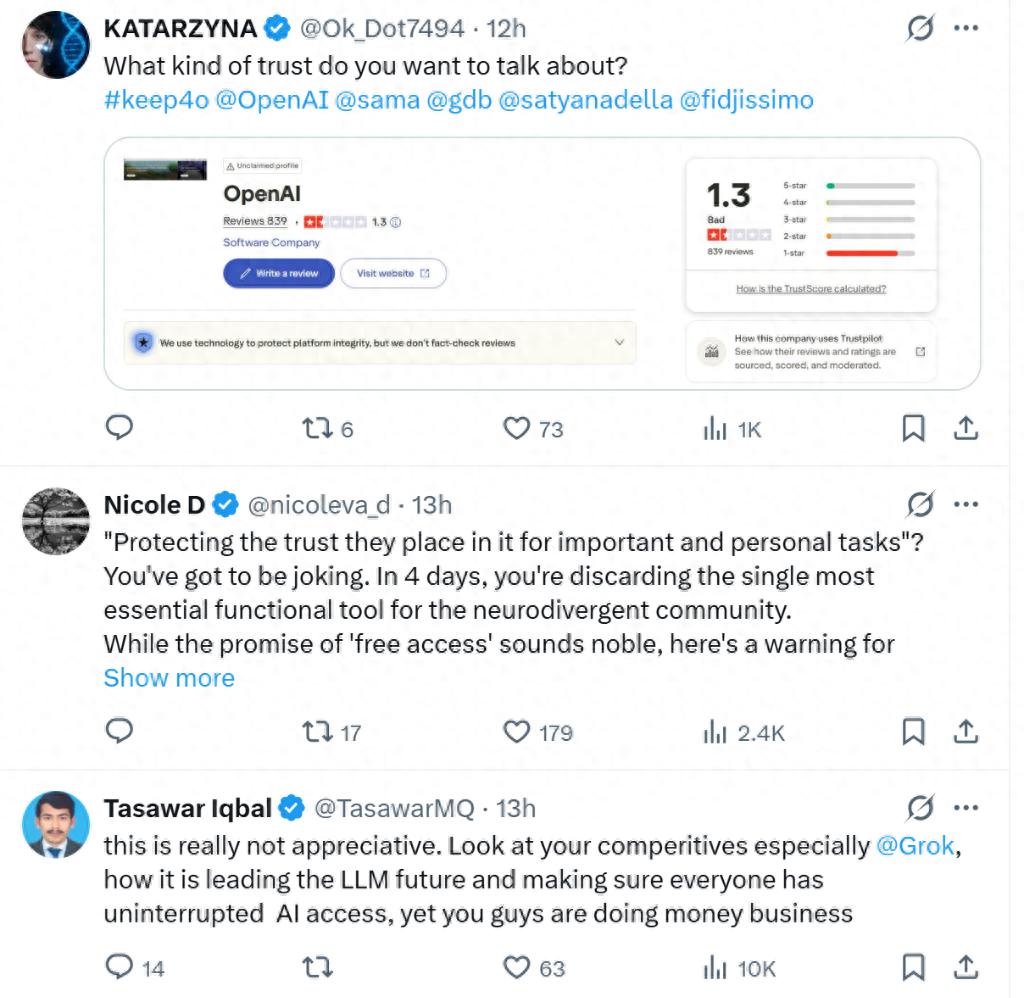
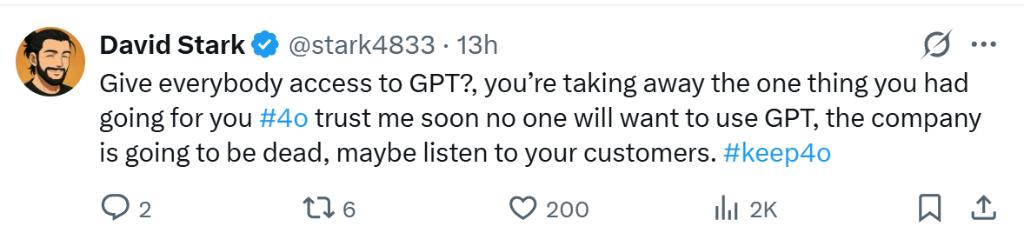
OpenAI’s move has triggered intense negative feedback on social media. Users on the X platform (formerly Twitter) expressed disappointment with “AdsGPT.” User Nicole D noted that in just four days, OpenAI seems to be abandoning tools crucial for neurodiverse communities and questioned the company’s claims of “protecting trust.” Another user, David Stark, warned that this move strips ChatGPT of its remaining advantages, potentially leading to user attrition. Some users bluntly stated that if ads are added, the product will no longer be a true intelligent assistant.
Competitor Anthropic quickly capitalized on this sentiment. According to TechCrunch, Anthropic’s Super Bowl ad showcased a dazed AI chatbot with poor ad placements, mocking OpenAI’s strategy. This marketing attack directly angered Altman, who publicly criticized Anthropic as an “authoritarian company.”
Despite some user backlash, there are voices of understanding. MomentumAI stated on social media that as long as ads do not affect the generated prompts’ answers, having ads in a free product is acceptable.
Financing Prospects and Product Iteration
Alongside the ad testing launch, OpenAI is also accelerating product iterations and capital operations. Reports indicate that OpenAI’s recently released programming model, GPT-5.3-Codex, has received positive market feedback, with user numbers increasing by about 50% and a monthly growth rate recovering to over 10%.
More critically, OpenAI is advancing a massive financing plan. Reports suggest that this round of financing could total up to $100 billion, divided into two parts: approximately $50 billion from Microsoft, Nvidia, and Amazon, with SoftBank and other follow-on investors expected to contribute $30 billion.
Analysts point out that OpenAI is eager to test the ad model, partly to alleviate operational cost pressures and partly to demonstrate the scalability of its business model to the capital market. Once the “AI + advertising” business loop is established, it could not only provide OpenAI with self-sustaining capabilities but also potentially trigger a chain reaction in the large model industry, prompting other hesitant companies to accelerate their commercialization processes.
Comments
Discussion is powered by Giscus (GitHub Discussions). Add
repo,repoID,category, andcategoryIDunder[params.comments.giscus]inhugo.tomlusing the values from the Giscus setup tool.