ChatGPT Launches Ads Manager
On May 5, 2026, OpenAI officially launched a beta version of its self-service advertising management tool (Ads Manager) in the United States. Advertisers in the U.S. can now register and directly purchase ad placements within ChatGPT.
When ChatGPT completes a response, an ad marked as “sponsored” will appear below the answer, clearly distinguishing it from the original content.

This development has been in the works for some time. In February, OpenAI initiated ad testing in the U.S., which expanded to Australia, New Zealand, and Canada in April, targeting both free and Go subscription users. A company spokesperson revealed that just six weeks after launching the pilot project in the U.S., the annualized revenue exceeded $100 million—a promising start.
OpenAI’s projections to investors reveal even greater ambitions: $2.5 billion in ad revenue by 2026, increasing to $100 billion by 2030. For comparison, Google is expected to generate over $300 billion in ad revenue in 2025, while Meta is projected to approach $200 billion.
OpenAI aims to challenge the advertising empires built by giants like Meta and Google. While its main competitor, Anthropic, has firmly rejected advertising, traditional giants cannot afford to ignore this shift.
This month, Alphabet, Google’s parent company, announced that its AI product Gemini will incorporate advertising features in the future. Meta also announced in April 2026 that its AI assistant, Meta AI, will begin ad trials in the third quarter. Additionally, Microsoft has integrated ads into Copilot, and Amazon’s AI shopping assistant has opened up sponsored responses to brands.
A New Era of Advertising
As chatbots replace traditional search engines as the new entry point for searches, it is expected that AI model providers will turn to advertising as a monetization path.
Currently, OpenAI boasts 900 million weekly active users, who actively engage with ChatGPT by asking questions and receiving generated content and recommendations, creating a substantial potential advertising market.
For OpenAI, advertising monetization is also a pressing necessity. The development of large models is costly; in 2025, OpenAI’s revenue was $13 billion, but it faced a cash loss of $8 billion. While its user base is large, monetization efficiency is relatively limited, with only about 5% of the 900 million weekly active users being individual subscribers (around 50 million), and over 9 million paid enterprise users.
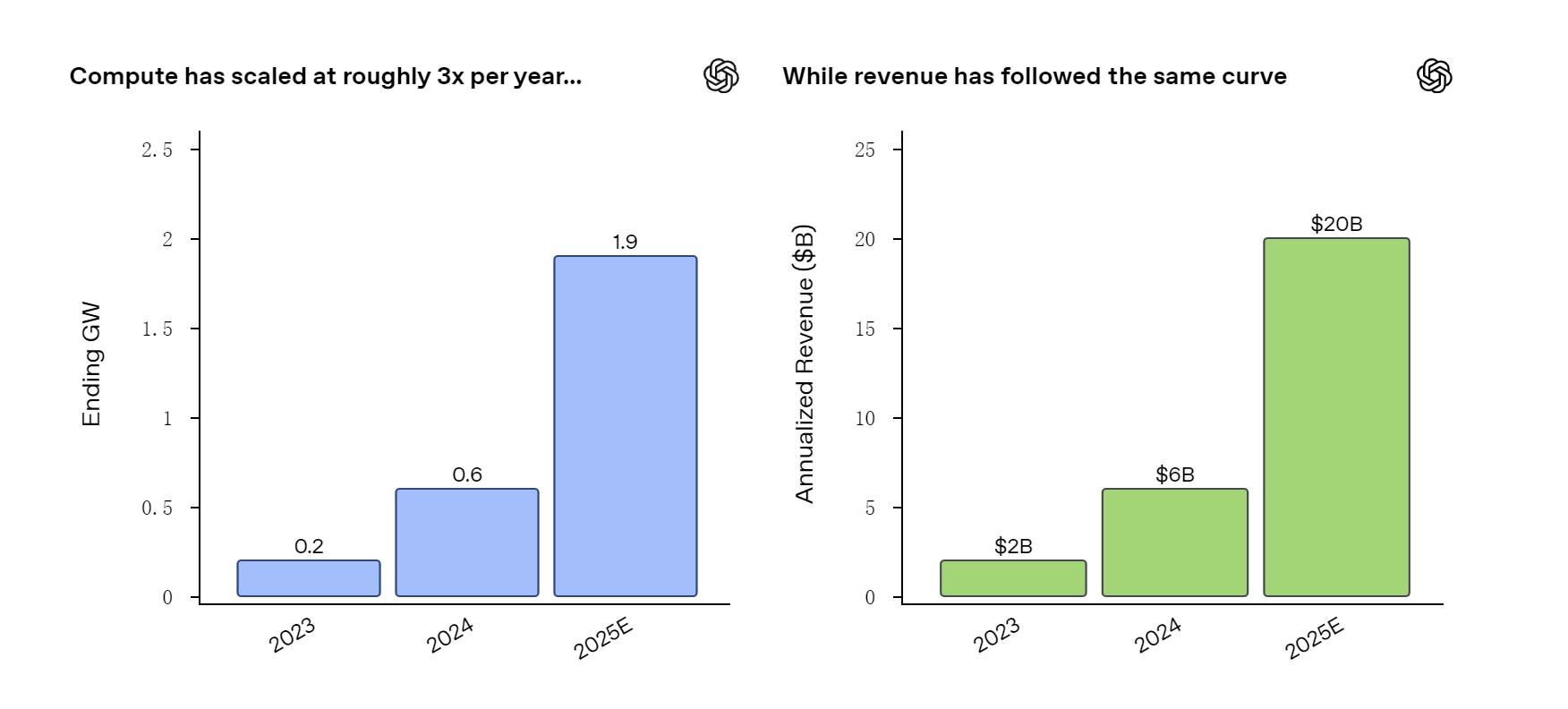
Meanwhile, its top competitor, Anthropic, is experiencing strong growth. Although it has fewer users than OpenAI, it has achieved robust revenue driven by enterprise clients and developers, with an annual recurring revenue (ARR) of approximately $30 billion last year, surpassing OpenAI. Each monthly active user contributes an impressive $211, which is eight times OpenAI’s $25.
For OpenAI, which has initiated plans for an IPO, demonstrating its commercialization capabilities has become increasingly urgent. Consequently, it has made a series of adjustments to its business model, with advertising monetization being a key strategic direction. Recently, OpenAI has also shut down its Sora and ChatGPT shopping features while strengthening its B2B layout.
In February, ChatGPT officially launched its first batch of ad tests, becoming the first mainstream AI chatbot to open up advertising. Ads are charged based on cost per thousand impressions (CPM), starting at $60. This pilot project achieved over $100 million in annualized revenue within six weeks, primarily from less than 20% of ChatGPT’s free and Go subscription users in the U.S., with over 600 advertisers participating.
The newly launched self-service advertising platform by OpenAI allows ChatGPT ads to charge not only based on impressions but also on cost per click (CPC). The previous minimum spending threshold of $50,000 has been eliminated, making it accessible to all advertisers across the U.S.
OpenAI anticipates supporting more billing and optimization methods in the future, enabling advertisers to bid based on their most important performance metrics. According to OpenAI’s previous projections to investors, its advertising revenue is expected to climb from $2.5 billion in 2026 to $100 billion by 2030.
AI Opens Doors to Advertising
Chatbots are increasingly becoming new search and traffic entry points. With OpenAI taking the lead in placing ads in ChatGPT, a shift in the advertising industry has begun. Giants like Google and Meta are now also entering the fray—both to defend their positions and to secure new ones.
On May 2, 2026, Alphabet’s Chief Business Officer, Philipp Schindler, explicitly stated during a quarterly earnings call that its AI product Gemini will incorporate advertising features in the future. He noted that the training and operational costs of large AI models are high, and advertising is a core method to serve billions of users with Gemini, allowing for lower marginal costs to cover operational expenses from user growth while keeping the product free or low-cost.
However, what he did not say is: if users stop using traditional search engines and instead directly ask AI, how long can the foundation of Google’s $300 billion annual advertising empire remain stable?
Meta is also feeling the pressure. In April 2026, the social advertising giant announced that its AI assistant, Meta AI, will pilot ad placements in the third quarter, focusing on personalized recommendations in social scenarios.
Unlike Google, which has cloud services and other revenue sources, Meta relies almost entirely on advertising. Competition from TikTok in the short video space and the potential diversion of social time by AI chatbots threaten to erode its moat. Therefore, it has begun experimenting with embedding ads in AI conversations and integrating ad placements across Facebook and Instagram’s news feed ads.
Not all AI companies, however, choose to embrace advertising. Anthropic, OpenAI’s main competitor, has firmly rejected monetizing through ads, believing that accepting ad placements would compromise the neutrality of AI. During the 2026 Super Bowl, Anthropic ran two satirical ads, ending with the slogan: “Ads are flooding AI, but Claude is exempt.”
Anthropic’s confidence stems from its fundamentally different business model—about 80% of its revenue comes from enterprise clients, eliminating the need to rely on advertising to support free users.
Regardless, the AI industry is undeniably moving into the advertising era. How AI advertising will be implemented and how it will reshape the digital advertising landscape remains to be seen.
Comments
Discussion is powered by Giscus (GitHub Discussions). Add
repo,repoID,category, andcategoryIDunder[params.comments.giscus]inhugo.tomlusing the values from the Giscus setup tool.