Introduction
In February 2026, OpenClaw became a sensation. While the internet buzzed about lobster-themed content, I noticed a significant trend: from late February to March, major tech companies launched their own OpenClaw platforms, igniting a fierce competition.
However, by the end of March, interest in lobsters began to wane. Upon reviewing the products launched during this period, I discovered a hidden trend overshadowed by the lobster hype:
- March 9: Tencent launched WorkBuddy, an AI-native desktop intelligent agent workspace.
- March 17: Alibaba released DingTalk “Wukong,” positioning itself as an enterprise-level AI-native work platform.
- March 19: ByteDance upgraded Feishu Aily into a new intelligent agent platform.
- March 23: Baidu introduced DuMate, targeting personal and team desktop-level AI agents.
Then, on April 8, Anthropic released Claude Managed Agents. The day after, US software stocks plummeted, with the SaaS index dropping 5.5% in a single day.
Analyzing this timeline reveals a booming sector: AI employees.
The success of OpenClaw has brought AI into everyday life, and tech giants see a larger opportunity: to integrate AI into enterprises to reduce labor costs and enhance efficiency.
On the same day Claude Managed Agents launched, another product made its global debut: GenSpark 4.0.
GenSpark 4.0 Vision | Image Source: Genspark
Its vision is: to make AI employees ubiquitous.
After spending several days deeply experiencing this product, I felt strongly that:
The predicted wave of layoffs by Anthropic’s CEO may indeed be imminent.
GenSpark’s Development and Transformation
Let’s discuss GenSpark’s journey. Before becoming a dark horse, it underwent a challenging transformation:
In June 2024, GenSpark launched its first product, an AI search tool, amassing around 5 million users. However, the team quickly realized that most people search for information not just to acquire knowledge but to accomplish specific tasks. This understanding prompted GenSpark to shift its focus: not only to provide information but also to help users complete tasks.
In April 2025, they released the Super Agent suite, officially transitioning from AI search to general AI agents.
The results were immediate, achieving an ARR of $36 million within 45 days of launch.
By late January 2026, they launched Workspace 2.0, emphasizing “Don’t Type, Just Speak,” shifting interaction from text prompts to voice-first, aiming to reshape the knowledge worker’s office model.
At this point, the company’s ARR had surpassed $100 million, with Series B funding expanding to $300 million.
On March 12, 2026, GenSpark 3.0 and Genspark Claw were launched together. Their ambitious slogan was: “You no longer work with AI; you hire AI to work for you.”
This version marked a shift from “AI tools” to “AI employees,” with ARR exceeding $200 million and Series B funding growing to $385 million, valuing the company at nearly $1.6 billion.
Less than a month later, on April 8, they officially launched: GenSpark 4.0.
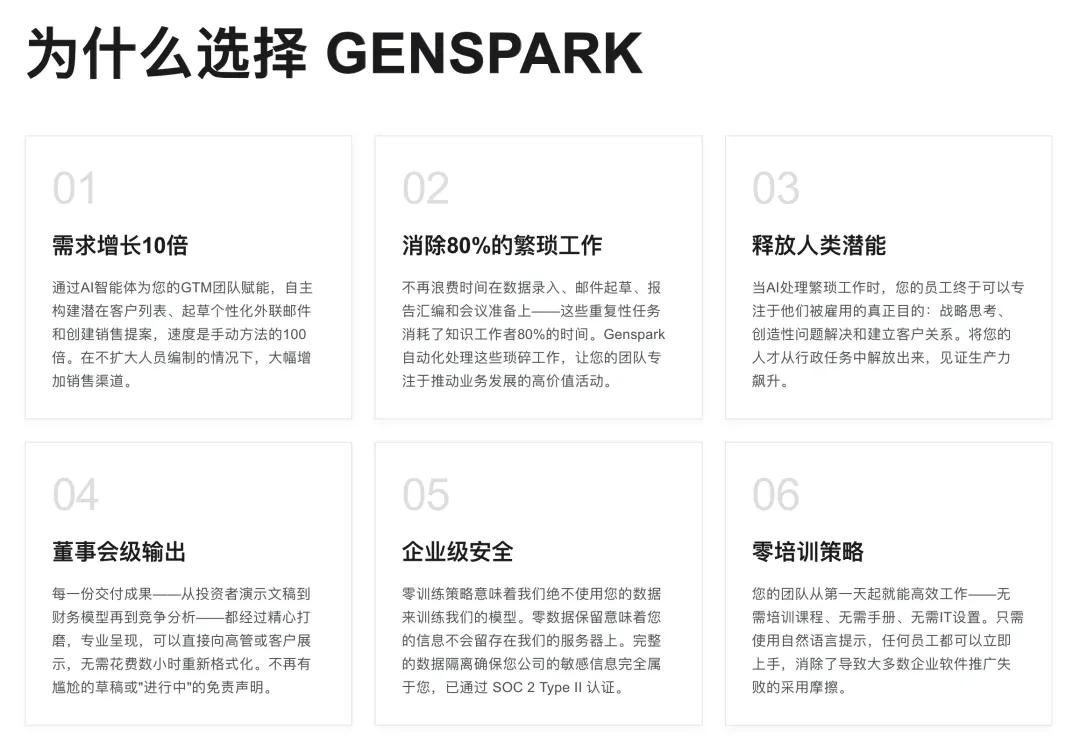
Why Choose Genspark | Image Source: Genspark
In this version, they truly found their mission: AI should adapt to existing workflows rather than requiring users to restructure their processes around AI.
Thus, in 4.0, they achieved native integration across desktops, Office, calendars, and workflows, supporting local file access and in-app operations, striving for a seamless experience where “you don’t feel the AI’s presence, but it is always helping you work.”
From search to agent, from tool to employee, GenSpark completed three critical transformations in two years, each aligning perfectly with the evolving AI landscape.
Why GenSpark is the Leader in This Sector
Returning to the AI employee sector, each major company’s product has its own approach.
However, after comparing various options, I found that GenSpark has indeed considered some key issues more deeply.
I attempted to break down this issue from first principles:
What does a product need to truly act as an AI employee?
I believe it must meet at least three conditions:
-
Enterprise-level operating environment.
AI employees must communicate with real people, receive files, and operate continuously in a stable environment. GenSpark 4.0 excels in this regard. It can converse directly with contacts and has natively integrated MyClaw, eliminating the need for users to install OpenClaw and configure it for Feishu or WeChat.

Genspark Interface | Image Source: Genspark
This may seem like a simple feature, but it is significant for average users: integrating OpenClaw, regardless of how clearly the documentation is written for Feishu or WeChat, any configuration step poses a barrier for non-technical users.
GenSpark has removed this configuration step, demonstrating their strong commitment to user experience.
-
A rich tool ecosystem: Providing various software that AI employees can use in real work scenarios.
GenSpark 4.0 integrates tools like Notion, email, GitHub, and document services, covering high-frequency scenarios for knowledge workers.
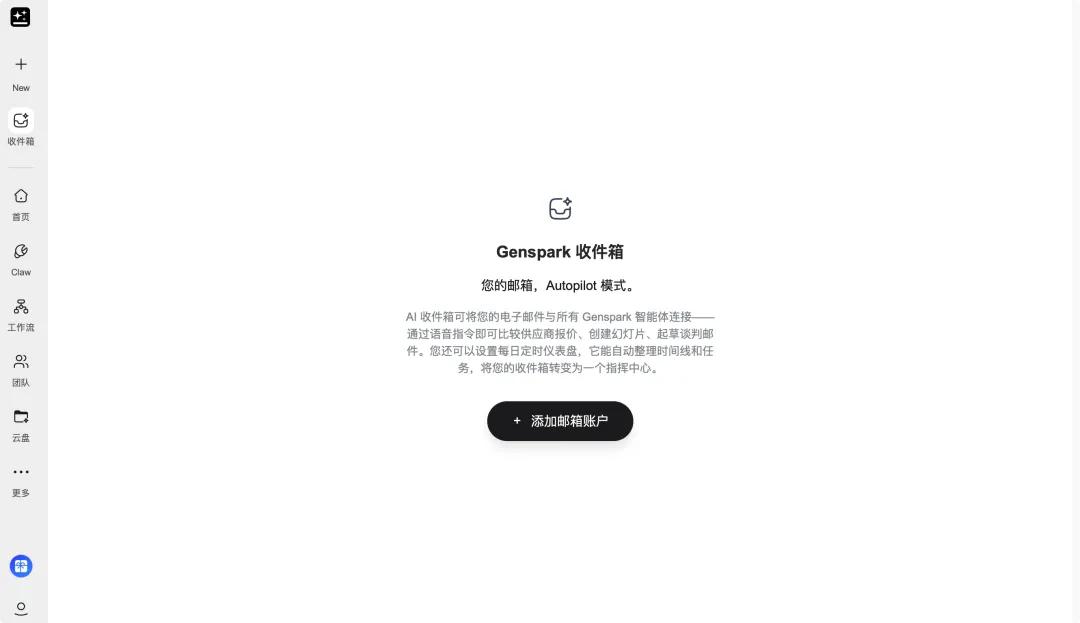
Genspark Email Interface | Image Source: Genspark
It also includes the essential trio for workers: PowerPoint, Excel, Word.

Genspark Trio Interface | Image Source: Genspark
-
Human-efficient interaction methods.
GenSpark 4.0 offers workflow functionality, allowing users to link various applications’ CLI and capabilities into action flows, or create Skills directly through conversation.
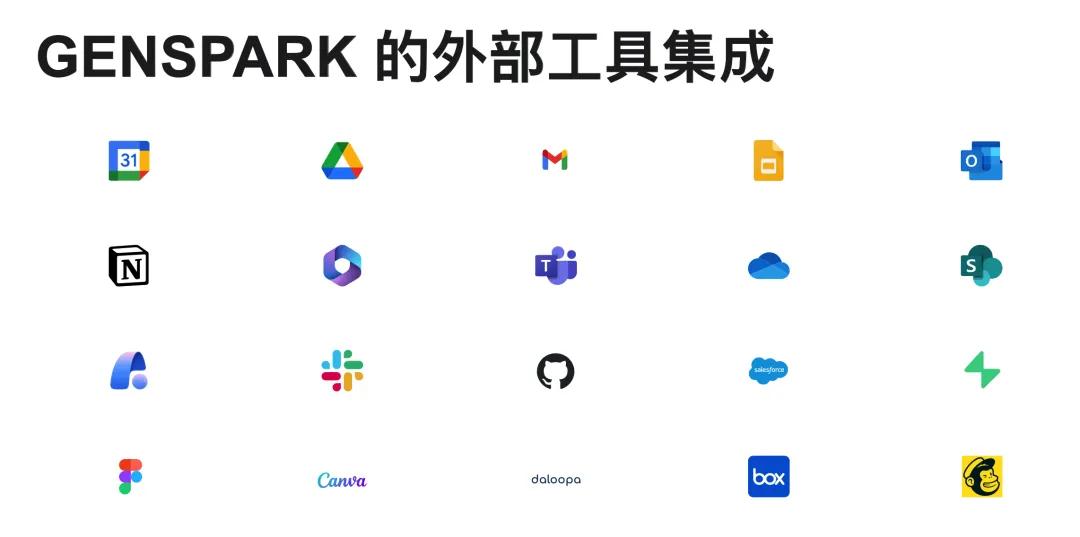
Genspark Tool Interface | Image Source: Genspark
Compared to the products mentioned earlier, only DingTalk and Feishu have built-in enterprise-level operating environments. Furthermore, if you want to create Skills, these products generally only allow AI to auto-generate them through conversation, making it difficult for humans to intervene in the iterative process. In other words, with these products, you cannot truly transform your work experience into a reusable, optimizable Skill.
This may be the true value of such tools.
GenSpark 4.0 offers a better solution in this regard:
You can easily participate in building and adjusting Skills, allowing work experience to be truly preserved.
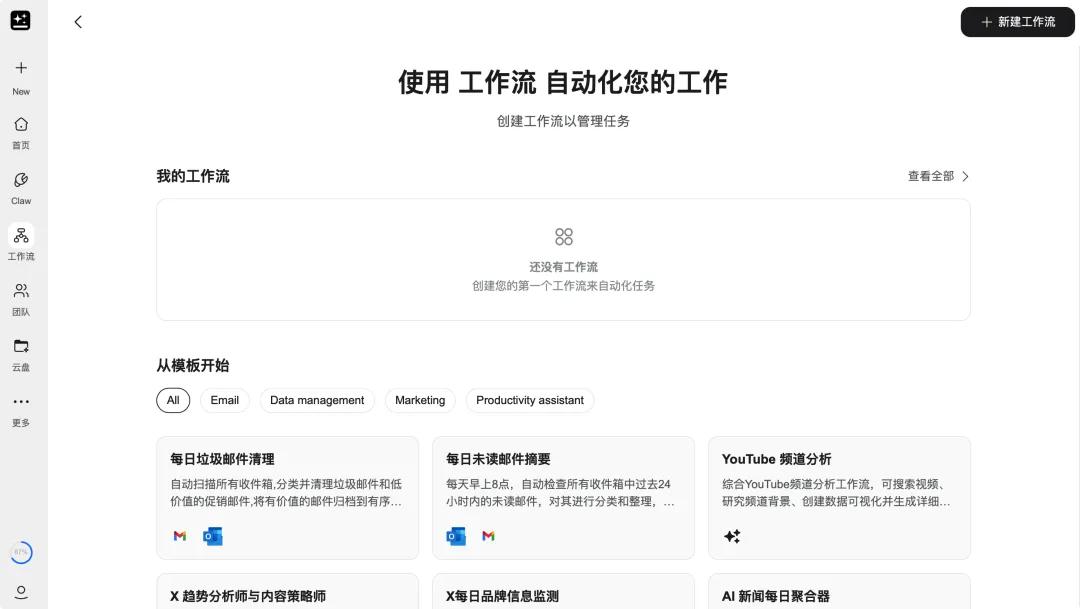
Genspark Workflow Interface | Image Source: Genspark
Overall, I conclude that:
GenSpark is indeed at least three months ahead in the product concept of AI digital employees.
Real-World Testing
With a leading concept, how effective is GenSpark?
Let’s conduct a real-world test using my typical work process: researching various AI tools, experiencing products, forming judgments, and then writing articles. How much does GenSpark 4.0 assist me? I decided to test it with a complete task.
Today, I want to study the topic: “What impact will Claude Managed Agents have on the software industry?”
GenSpark 4.0 offers a free trial, so I started from there.
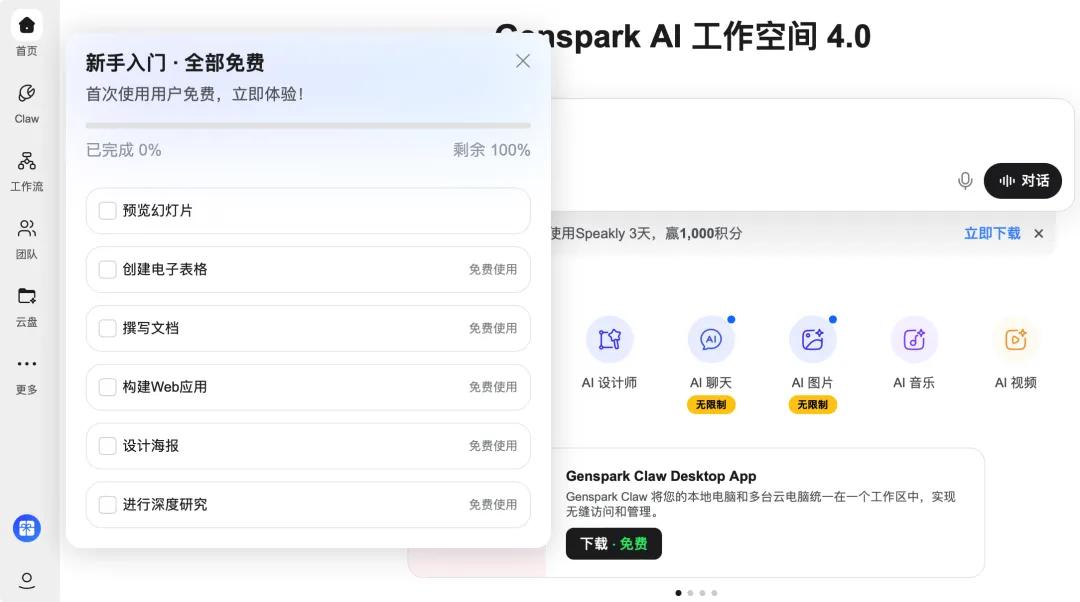
Of course, the best approach is to create a workspace centered around the topic:
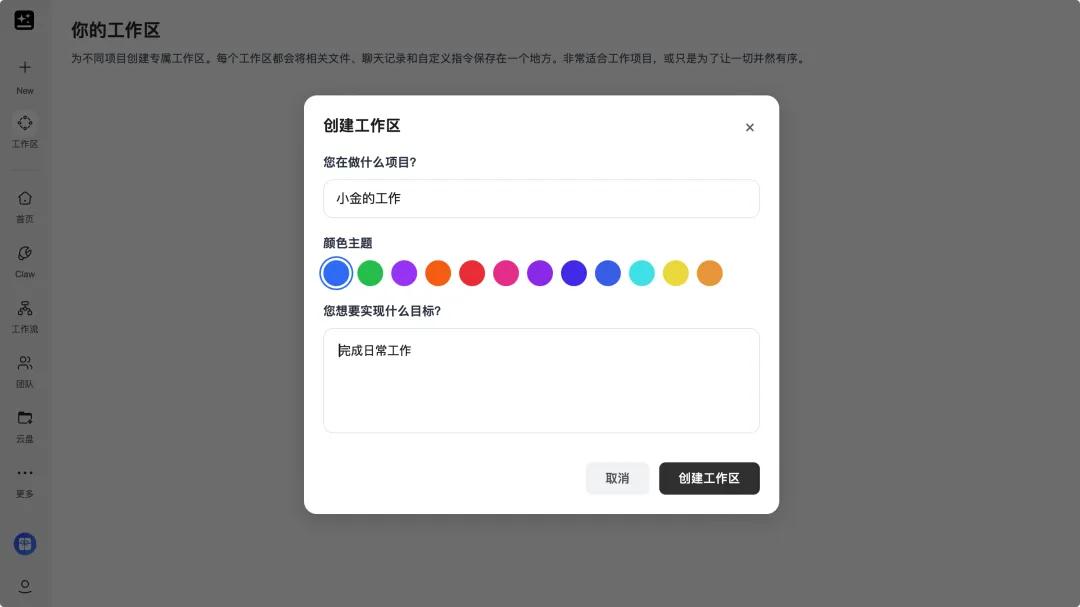
The workspace can add files and invite team members for collaboration. In this workspace, conversations can invoke GenSpark 4.0’s embedded intelligent agents to complete tasks.
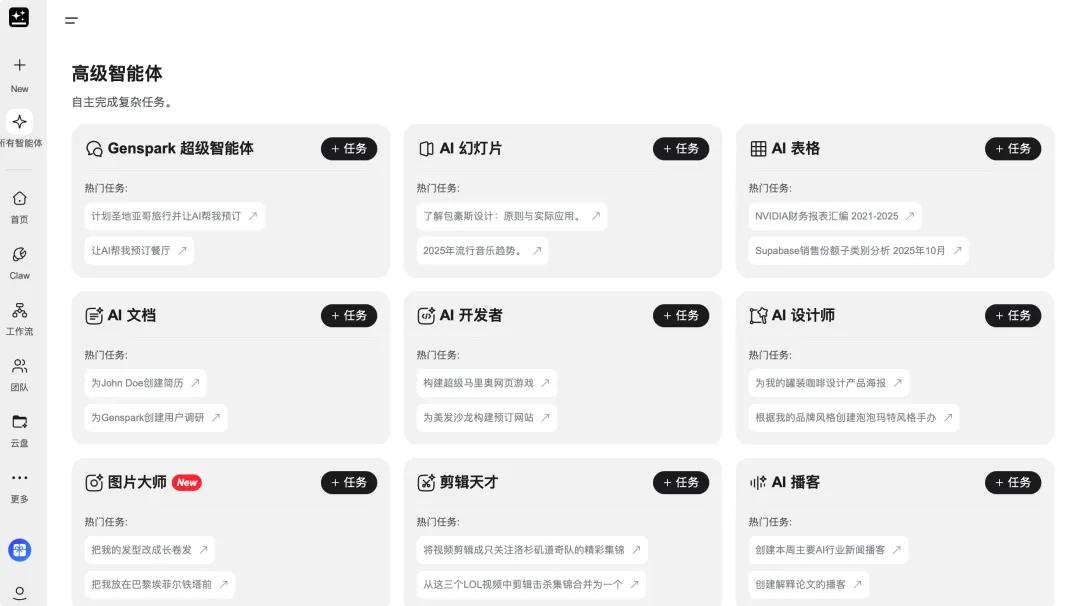
First, I downloaded the technical documentation for Claude Managed Agents from Anthropic’s official site and exported it as a PDF.
https://www.anthropic.com/engineering/managed-agents
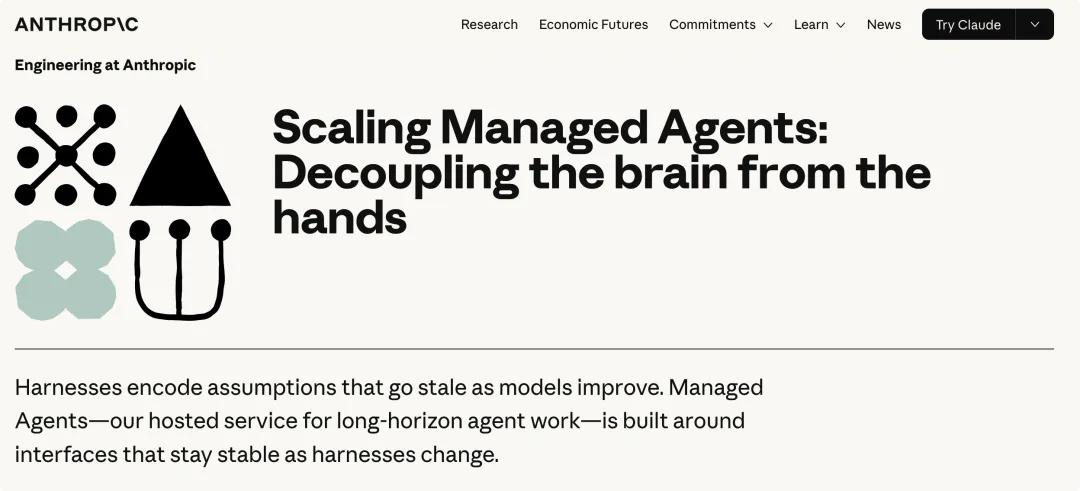
Then, I used GenSpark’s document writing feature to help translate this PDF.
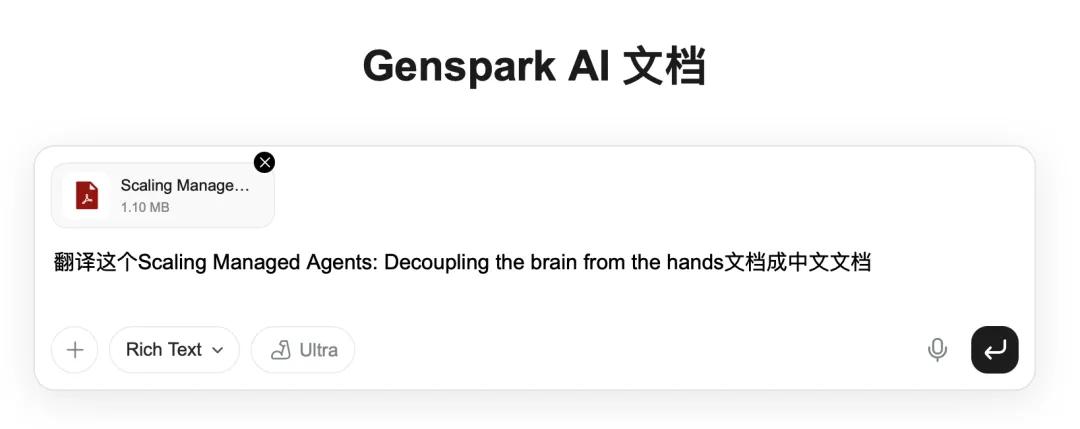
It quickly began processing, and before long, the translation was complete.
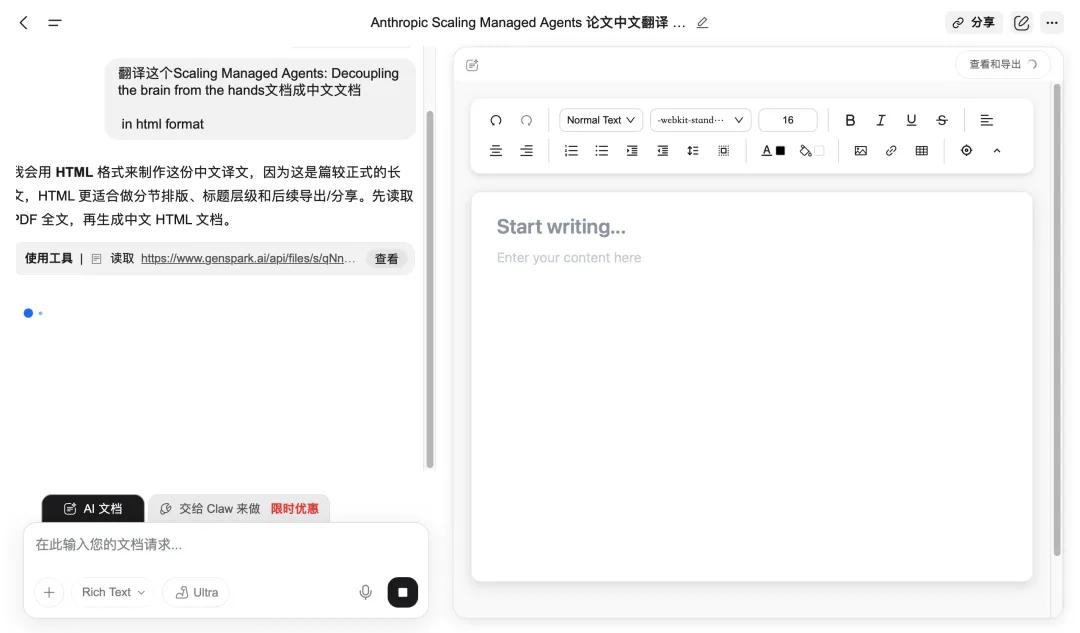
I was quite satisfied with the translation quality; the handling of technical terms was accurate, and readability was good.
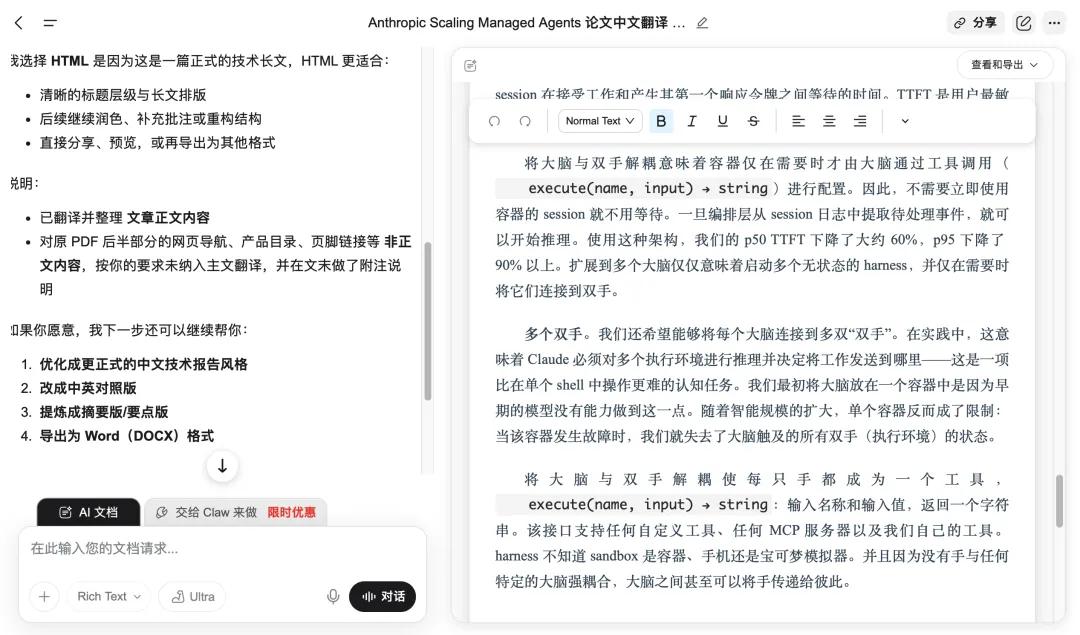
After obtaining the primary materials, I began more extensive research.
I asked GenSpark to conduct a comprehensive investigation on the topic of “Claude Managed Agents.”
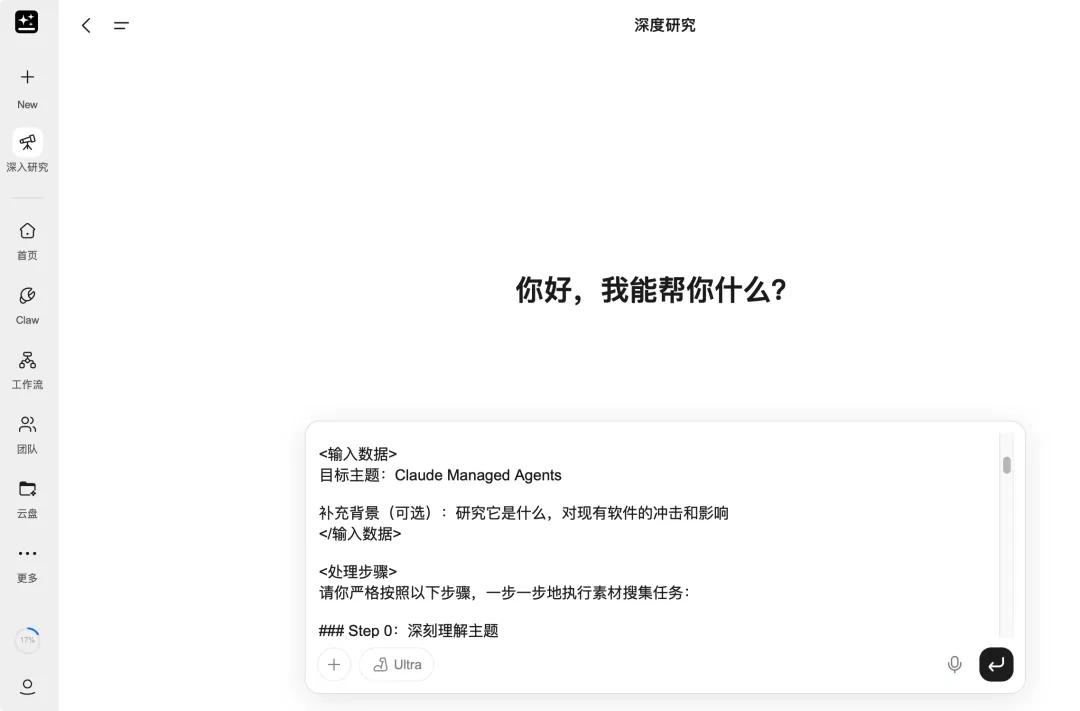
The next steps surprised me:
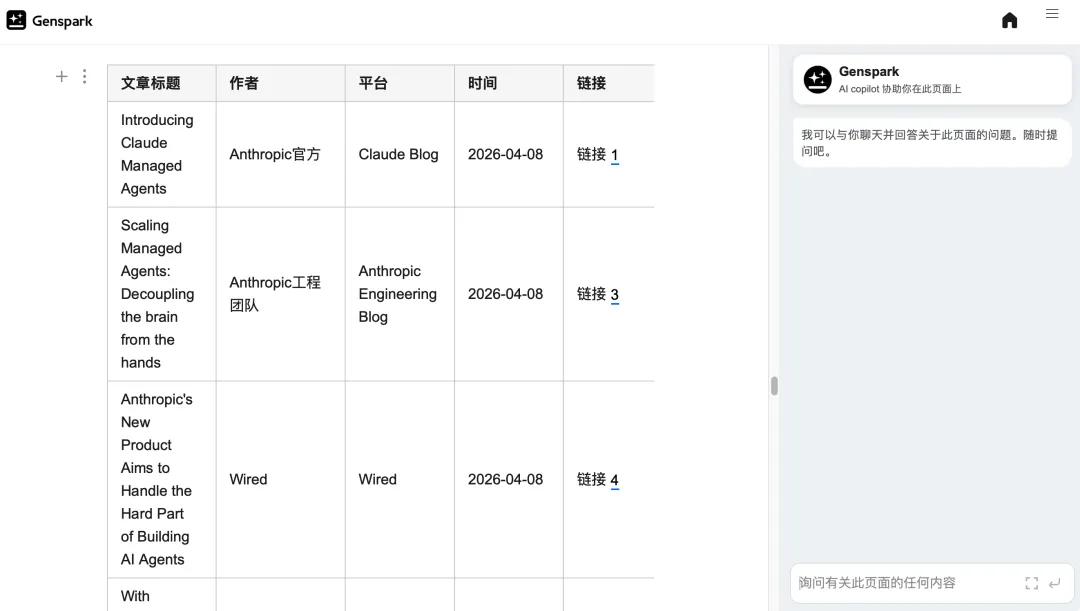
It gathered a wide range of opinions and judgments from platforms like Zhihu and Twitter/X, then produced a complete research report.
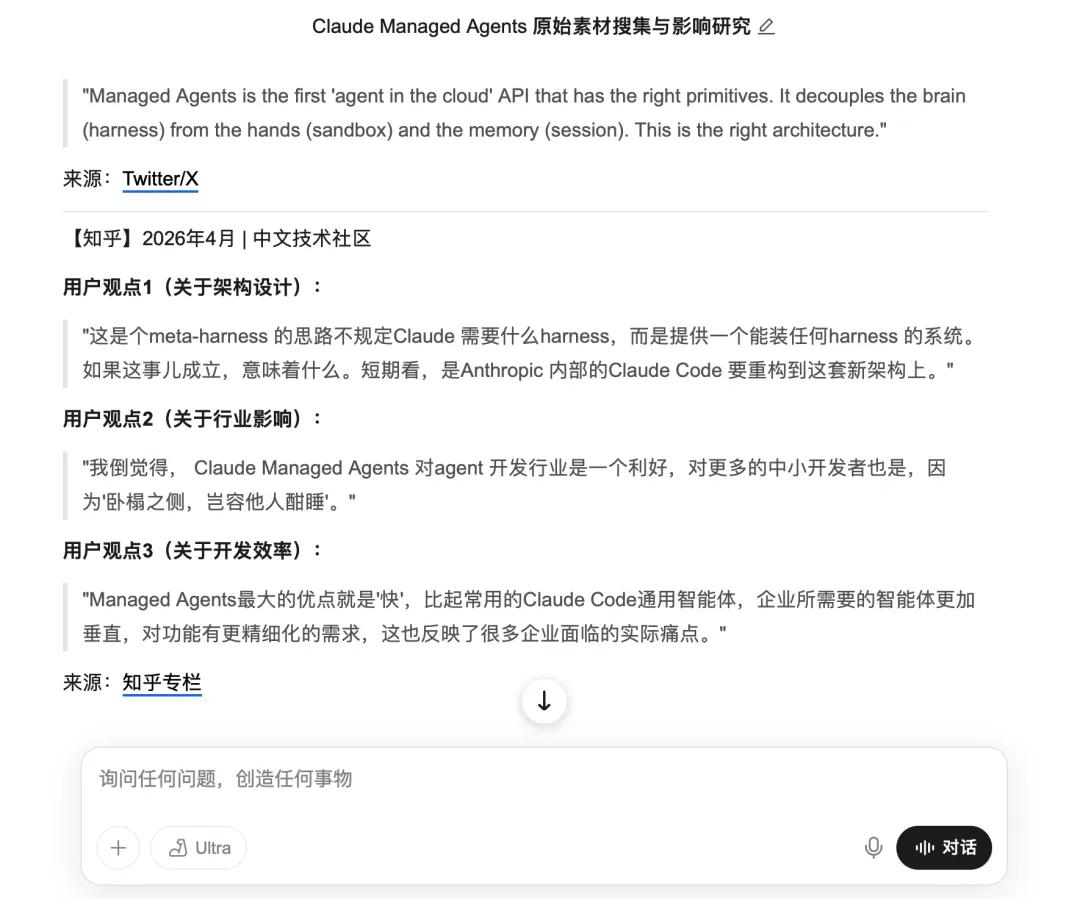
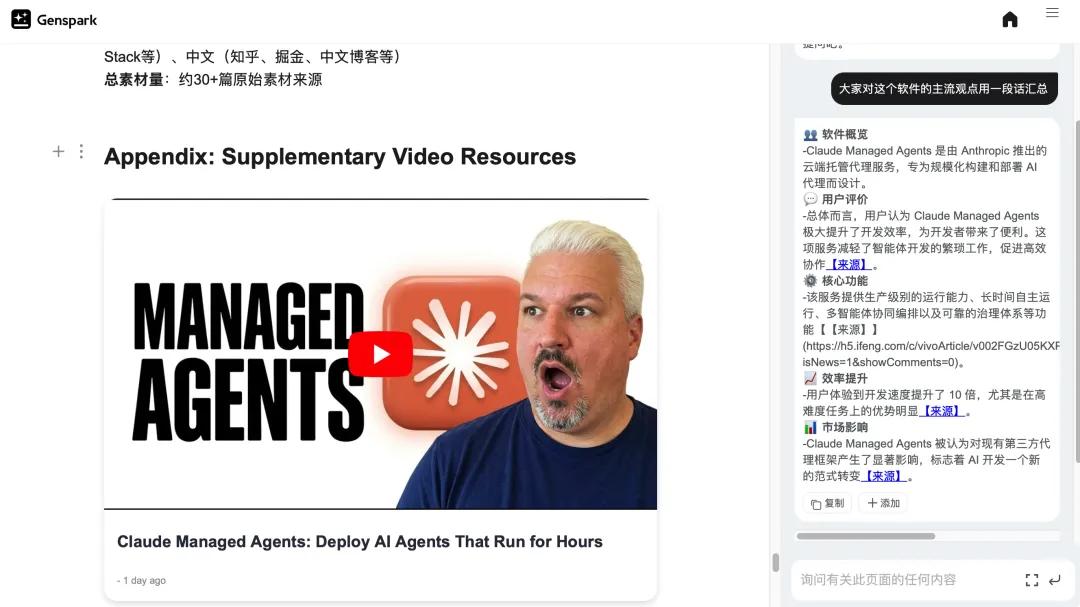
What was even more useful was that I could ask follow-up questions about the report, digging deeper into details I was concerned about.
I asked all my questions about this product, and the quality of the answers was quite high.
With the materials prepared, it was time to write.
Before I started, I did one thing: I created a writing Skill.
Through multiple conversations, GenSpark called OpenCode to generate a customized writing Skill.
This Skill incorporated my writing style preferences, article structure habits, and formatting norms.
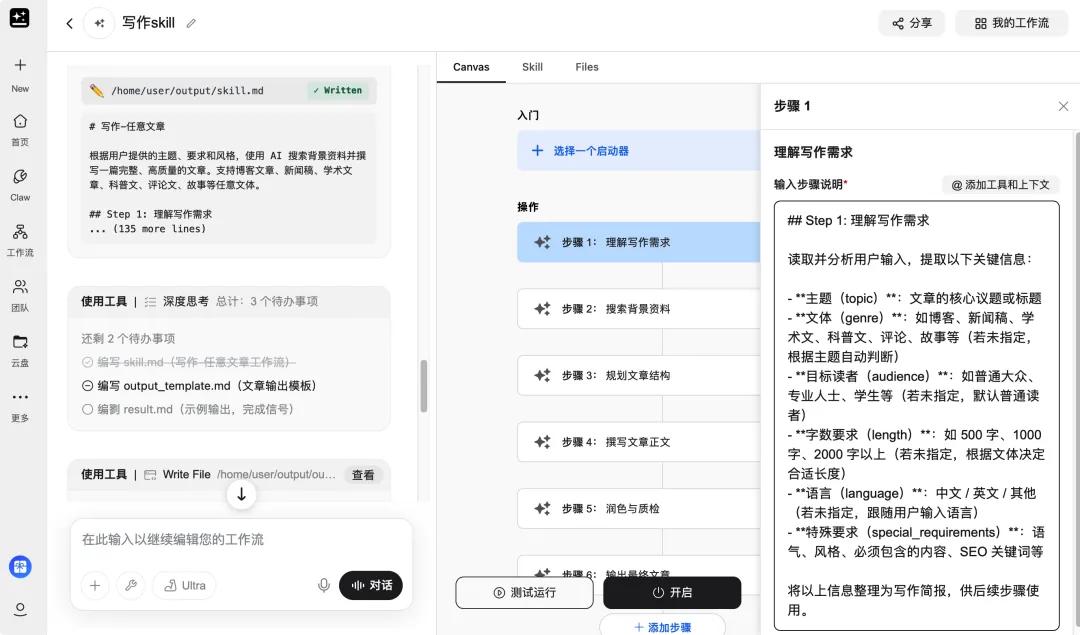
Then I used this Skill to begin generating the first draft of the article.
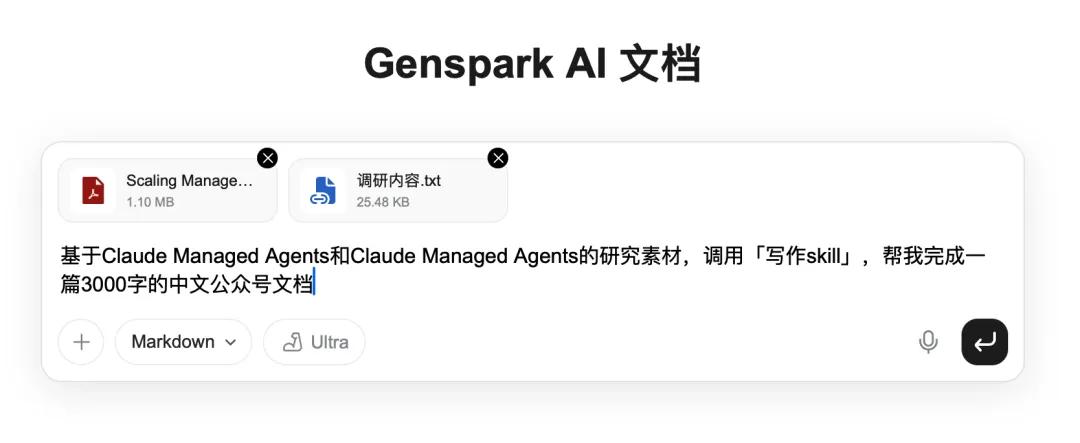
I must say, the quality of the draft was impressive:
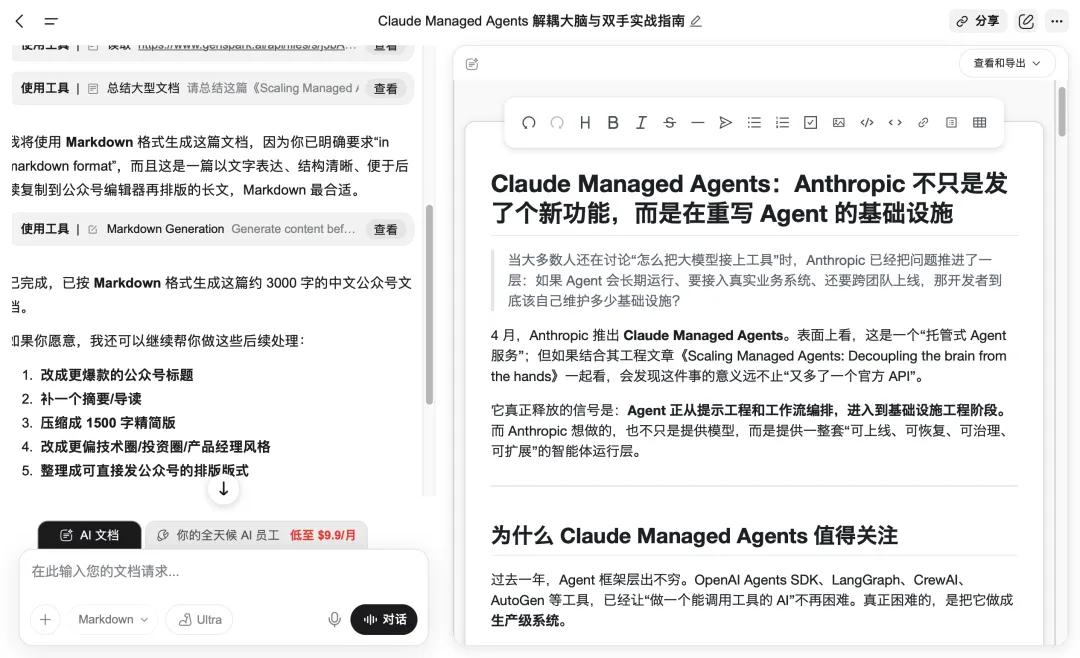
Clear structure, sufficient arguments, and a smoother flow than if I had written from scratch.
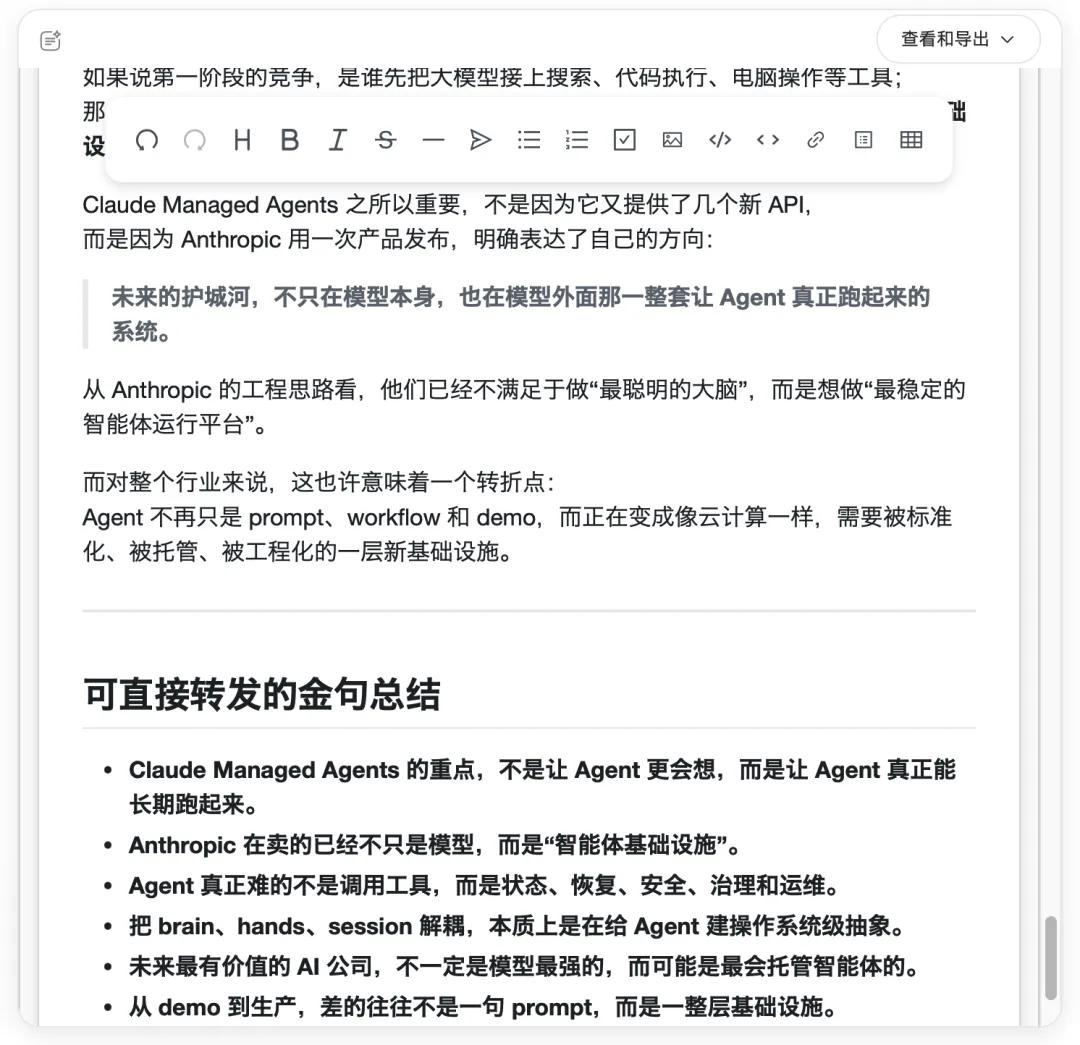
Throughout the process, I did not use any other tools:
From material collection, translation, in-depth research, to draft generation, everything was completed within GenSpark 4.0.
The only thing I needed to learn was GenSpark 4.0 itself, which took me just 50 minutes.
Additionally, GenSpark’s visual experience: it not only excels in tool capabilities but also invests effort into interface design and aesthetic interaction. Throughout the usage, you can feel the product team’s pursuit of visual details, which is rare in agent-type products.
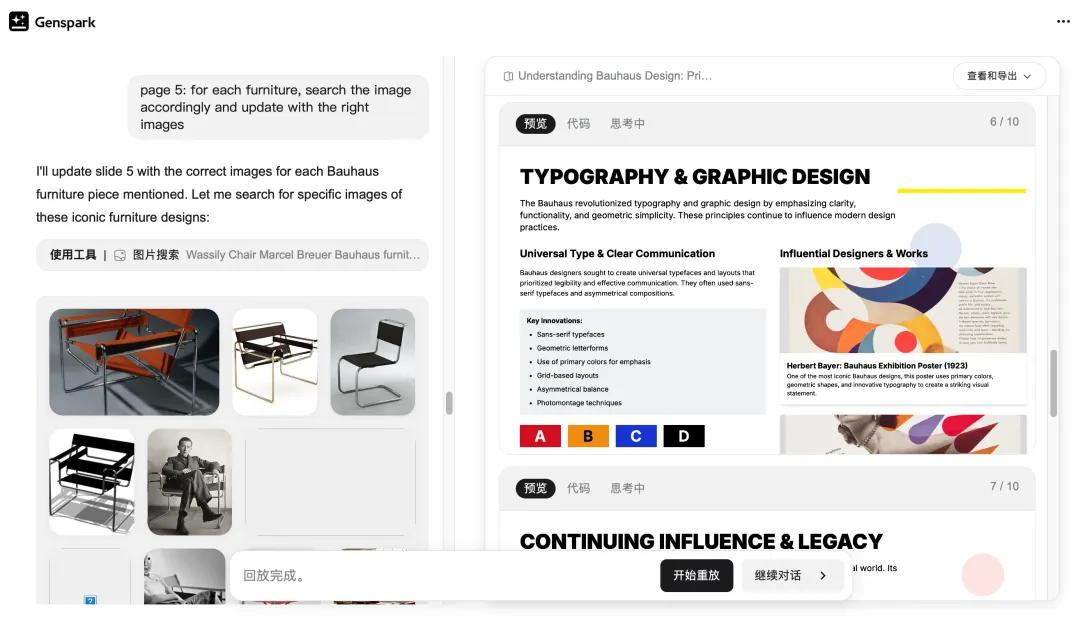
GenSpark PPT Presentation Interface | Image Source: Genspark
Unique Value of GenSpark 4.0
After testing, I began to ponder:
What needs to be done well to create AI employees?
Tools like Claude Code, OpenClaw, and Codex focus on providing a harness environment for AI. A harness allows agents to use various tools efficiently to complete specific tasks. These products address the question of “how to make AI work better.”
GenSpark does the opposite.
It provides humans with a working harness environment, addressing “how to enable people to use agents most efficiently to complete complex work tasks.”
GenSpark 4.0 considers: how to conveniently provide one-stop agent services to working individuals? How to allow users to transform work experience into reusable workflows? How to eliminate the need for users to switch between multiple tools?
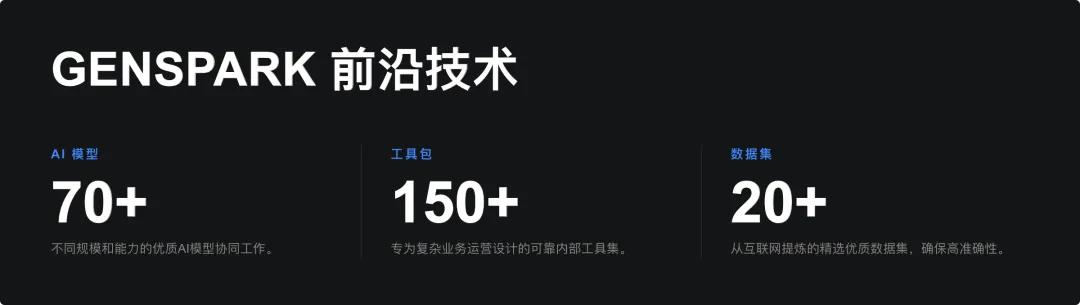
Genspark PPT Tool Introduction Interface | Image Source: Genspark
This difference may seem like a mere shift in perspective, but at the product level, the distinction is significant.
In traditional agent products, you might need to open one tool for research, switch to another for document writing, and use a third for collaboration. Each switch incurs efficiency loss and interrupts attention.
GenSpark 4.0 consolidates all these steps into one product, creating workspaces, adding files, inviting members, invoking intelligent agents, generating Skills, and executing workflows, all within a single interface.
This product concept reminds me of an interesting contrast during my research: while Anthropic was developing Claude Managed Agents, a technical blog mentioned a concept where they virtualized the core components of agents into three layers: session, harness, and sandbox, approaching the question of how to optimize AI performance from a technical architecture perspective.
GenSpark takes the opposite approach: thinking from the user’s workflow perspective on how to make collaboration between humans and AI as smooth as possible.
Two paths: one towards AI’s efficiency limits, the other towards human experience limits.
GenSpark chose the latter and executed it solidly.
Where Are We Heading in 2026?
In March, Anthropic released a report containing a data point that struck me:
Many job roles still have numerous tasks that can be automated by AI, and fully leveraging AI for these tasks could unlock tremendous value.
Perhaps this is why the AI employee sector is so hot in 2026.
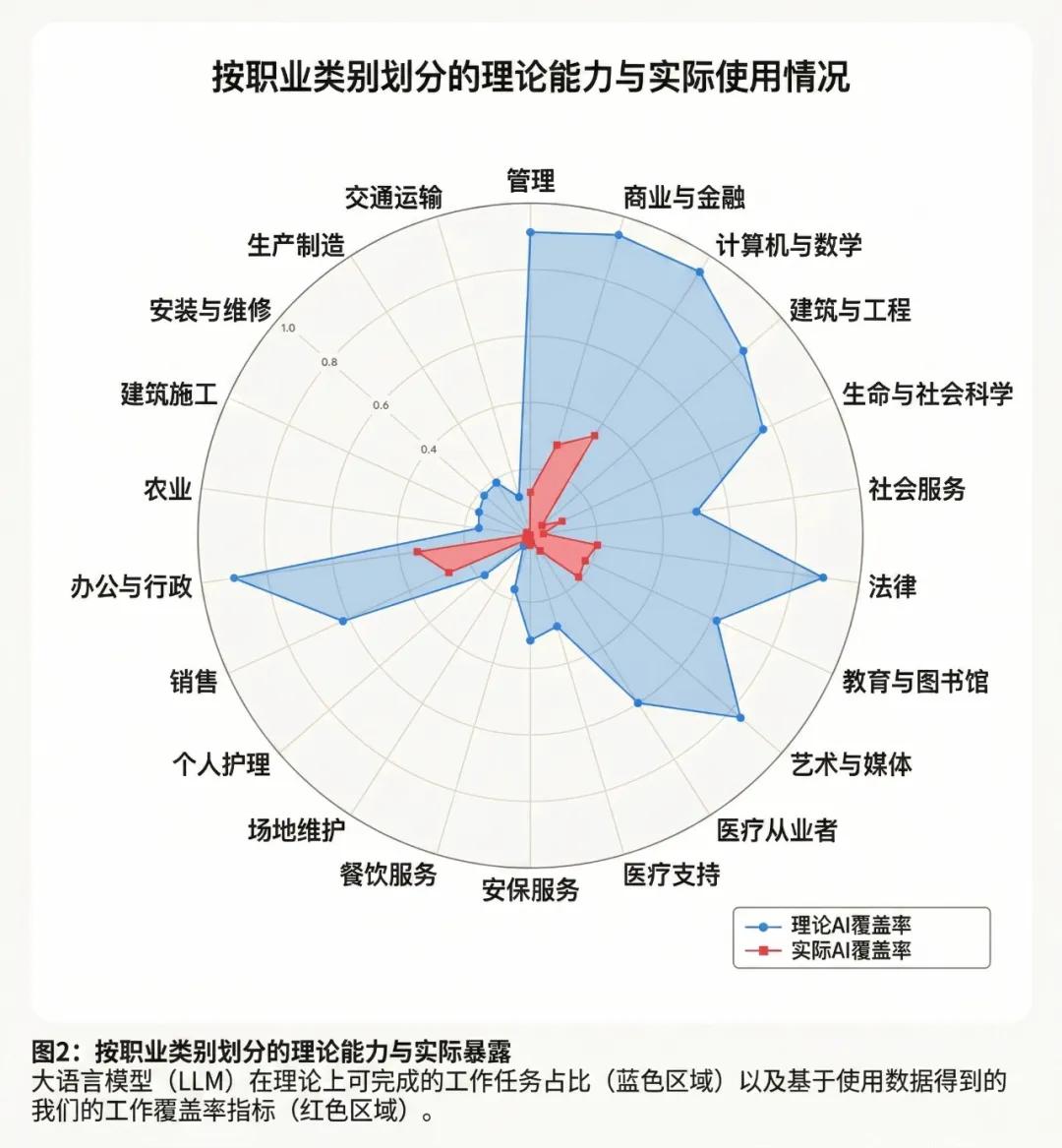
Anthropic Document Screenshot Translation | Image Source: Anthropic
Why are major companies vying for this sector?
I believe they are essentially competing for the entry point: When each person’s unique workflow and conversation records remain on one platform, it becomes challenging to migrate that data elsewhere. Users staying means ongoing usage and consumption. This battle isn’t about feature competition but about who can become the default work entry point for users first.
On an individual level, those parts of work that can be automated will eventually be taken over by AI: this trend is irreversible. Just like my workflow, tasks such as material collection, translation, and preliminary research are already well-handled by GenSpark 4.0. I can focus more on judgment, decision-making, and creativity.
Before long, each of us may have one or even multiple AI employees: perhaps Wukong, DuMate, WorkBuddy, or Aily.
But GenSpark 4.0 gives me the impression that it has the most comprehensive and thorough vision of what AI employees should look like.
After completing this article, I found myself spending much more time in GenSpark 4.0 than just testing: I noticed that I was unconsciously migrating more and more of my work onto this platform.
This is likely what a good agent product should embody: you don’t use it because it has powerful features; you find yourself unable to live without it as you use it.
Finally, in 2026, GenSpark will provide all users with unlimited access to AI chat and AI image capabilities, integrating top models such as Nano Banana 2, Gemini 3.1 Pro, GPT-5.4, and Claude Opus 4.6.
GenSpark 4.0 is worth taking the time to experience.
Comments
Discussion is powered by Giscus (GitHub Discussions). Add
repo,repoID,category, andcategoryIDunder[params.comments.giscus]inhugo.tomlusing the values from the Giscus setup tool.